
- Session50 minutes
- Cost$185 flat rate
- WhereNanaimo & area
Where You Might Feel It
Stiffness that is worst first thing in the morning.
- Stiffness that is worst first thing in the morning.
- A sharp catch when you bend or twist.
- Tightness through your lower back and hips that has built up over months.
- A dull ache after sitting or standing for a long time.
- Pain that flares after lifting, gardening or a long day.
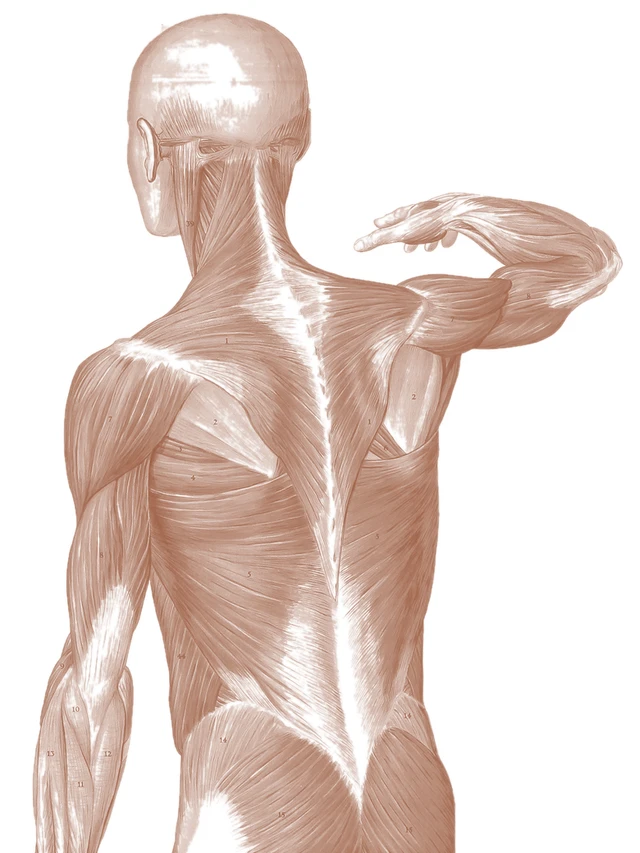
Spots show common areas, not a diagnosis. Illustration adapted from Gustaf Wennman’s anatomical wall chart (c. 1920, public domain): cropped and recoloured.
At a Glance
Common patterns
A dull ache, stiffness or a sharp catch. It often builds with sitting, lifting or stress, and can flare up and settle again over time.
What's often behind it
Long sitting, lifting, old injuries, stress and everyday movement habits. For many people it is a mix of these, not one single cause.
Rest or keep moving?
For most back pain, gentle movement tends to help more than long rest. Kayla helps you find the right amount for you.
How Kayla Can Help
Not a fixed protocol. Kayla picks the mix that fits what your back is doing that day.

Manual therapy
Hands-on techniques that may ease stiffness and tightness so your back moves more comfortably.
→Myofascial release
Gentle, sustained pressure on the tissue around your muscles. Some people find it eases low back tightness.
→IMS (dry needling)
A thin needle placed in a stubborn tight muscle, when it fits and you are comfortable with it. Used alongside movement work.
→Movement & strength coaching
Simple, doable exercises and habit changes that help your back handle daily life and lifting.
Kayla's Whole-Person Approach
Back pain is not only about muscles and joints. Kayla looks at how your body, your nervous system and your everyday life fit together. This is called a biopsychosocial approach, and it is the approach many back pain guidelines support.
Body
How your back moves and handles load. Hands-on care and movement work are matched to what Kayla finds.
Mind
Stress and worry can turn up the volume on pain. Kayla explains pain in plain words and can teach calming tools like breathing.
Purpose & vitality
What you want your back to let you do again, like gardening, lifting your kids or getting through work. Your goals shape the plan.
Setting Expectations
Let's be honest: no one can promise a result or a timeline for back pain. Many episodes ease over a few weeks, but back pain often comes back. Kayla will assess you, explain what she finds in plain words, and build a plan that changes as you respond. If it looks like you need a scan or another kind of care, she will tell you.
BC physiotherapists must explain the benefits and risks of a treatment and get your consent before treating you, and you can stop at any time. See the standards.
Back Pain: Frequently Asked Questions
Can physiotherapy help with low back pain?
For many people, yes. Staying active, exercise and hands-on care are often recommended in back pain guidelines. No physiotherapist can promise a result or a timeline, though, because every back is a different mix of causes. Kayla offers a thorough assessment, hands-on care and a plan that adjusts as you respond.
Do I need a doctor's referral for back pain?
No. In BC you can book a physiotherapist directly. A few insurance plans ask for a referral, so it is worth a quick check with yours.
Can physiotherapy help with sciatica (back pain with leg pain)?
Often it can be assessed and treated, but it depends on what is causing it. Tell Kayla if pain, tingling or numbness travels into your hip or leg. Leg symptoms can involve a nerve, so they are treated differently from pain that stays in the back. Kayla will tell you what she finds and whether you need other care.
Do I need an X-ray or MRI for back pain?
Often not. Most back pain does not need a scan, and scans can show changes that are common in people with no pain at all. Kayla will assess you in person and, if she thinks a scan or a doctor's opinion would help, she will let you know.
How many sessions will I need?
It varies. It depends on how long you have had the pain, what is behind it and how you respond. After your assessment, Kayla can give you a rough idea and will adjust it as you go. You will leave with simple steps to use between visits.
What happens at a back pain appointment?
Sessions are 50 minutes. Kayla starts by listening to your story, then checks how you move. She explains what she finds, treats what fits that day with your consent, and gives you a few clear next steps.