
- PacingDynamic & graded
- SensationGentle to firm pressure
- Patient controlFull
What is Manual Therapy?
Skilled, hands-on mobilization of joints and soft tissue.
How it feels
Targeted pressure and guided movement. Usually comfortable, sometimes tender, and you can ask Kayla to adjust it.
The goal
Easing stiffness and pain so moving feels easier, alongside exercise where it suits you.
Pairs well with
IMS, myofascial release or strength coaching. Kayla may do them one after another in the same visit, or at a later visit, depending on what suits you.
Where Manual Therapy May Help
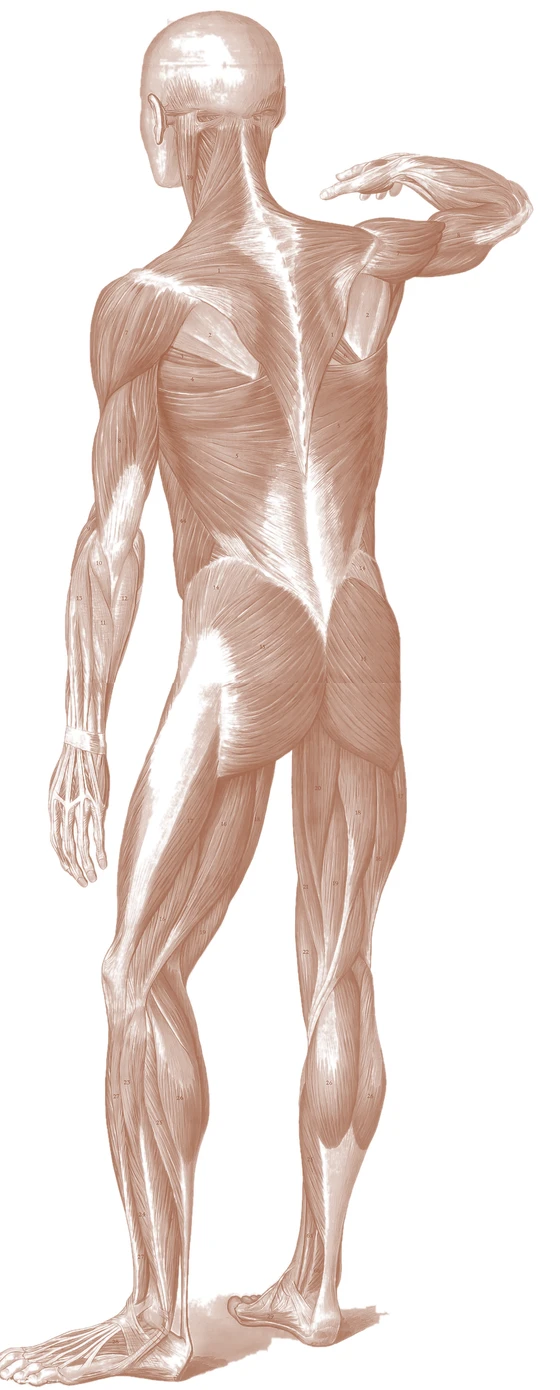
Tap an area on the body, or choose one below. Don’t see yours? Pick “Somewhere else.”
Headaches that start at the base of your skull, or build up after long hours at a screen.
How manual therapy may helpSome headaches are linked to stiff neck joints and tight muscles. Kayla checks your neck first. If it looks like a match, gentle joint and muscle work, plus movement, may help. A sudden, severe or unusual headache should be checked by a doctor first.
Your neck feels like it's locked in a vice when you turn your head.
How manual therapy may helpGentle joint and muscle techniques may ease neck stiffness. Kayla re-checks your head turn right away so you can feel any change.
Your shoulder catches sharply right at one specific angle.
How manual therapy may helpKayla finds the angle where it catches, then works the joint and surrounding muscles. Strength work often follows so the movement holds up.
Your upper back feels stuck and tight after long hours sitting.
How manual therapy may helpGentle mobilizing of the mid-back and ribs, plus muscle work, may ease that stuck feeling. Simple movement breaks help keep it from building back up.
Your lower back feels stiff, as if it fights you when you bend or turn.
How manual therapy may helpHands-on work may reduce guarding so you can move more comfortably, which makes it easier to start the exercises that matter for back pain.
Your hips feel tight, and it's hard to move freely.
How manual therapy may helpMoving the hip joint and releasing tight muscles around it may improve how freely it moves. Strength work may also help you keep that range.
Your knee feels stiff or achy, especially on stairs or after sitting for a while.
How manual therapy may helpGentle joint and muscle work around the knee, hip and ankle may help the knee move more freely. Strength work may also help you keep that change.
The area that bothers you isn’t shown here? That’s okay. These are just common spots.
What happens nextKayla starts by assessing the area and how it moves. She will tell you honestly whether manual therapy is a good fit for it, or whether something else may suit it better.
Spots show common areas, not a diagnosis. Illustration adapted from Gustaf Wennman’s anatomical wall chart (c. 1920, public domain): cropped and recoloured.
Setting Expectations
If you're worried about aggressive "cracking," you can relax. Kayla's manual therapy is smooth, graded movement. She doesn't use thrust or cracking techniques, she never forces a joint, and nothing happens without your consent.
Tell Kayla first about a recent fracture, osteoporosis, blood thinners, a skin wound or infection, pregnancy, a history of cancer, or numbness or weakness in an arm or leg. She may adjust her approach or choose another way to treat.
BC physiotherapists must explain the benefits and risks and get your consent before treating you, and you can stop at any time. See the standards.
The Details: Frequently Asked Questions
What is manual therapy and how does it work?
Manual therapy is skilled, hands-on treatment of joints and soft tissue. When a joint is stiff or sore, nearby muscles can tighten to guard it. Researchers think gentle, graded movement stimulates movement sensors in and around the joint and sends signals to your nervous system that can quiet pain and ease that guarding. Many people notice easier movement afterward, but the effect tends to be short-term, which is why Kayla pairs it with exercise.
What can I expect after a manual therapy session?
Many people notice easier movement and less pain soon afterward, though results vary. Mild soreness or a "worked" feeling in the treated area is common and usually settles within a day or two. If it is more than you expected, or has not eased after a few days, let Kayla know.