
- PacingSlow & sustained
- SensationSlow, melting stretch
- Patient controlFull
What is Myofascial Release?
Slow, sustained pressure on the fascia, the connective tissue that wraps your muscles.
How it feels
A slow, deep stretch, applied without oils or lotions.
The goal
Easing tightness and tension so movement feels freer and more comfortable.
Pairs well with
IMS, manual therapy or movement coaching. Kayla may do them one after another in the same visit, or at a later visit, depending on what suits you.
Where Myofascial Release May Help
Tap an area on the body, or choose one below. Don’t see yours? Pick “Somewhere else.”
A headache that comes with a tight neck, jaw or scalp.
How myofascial release may helpSlow, gentle pressure on the neck, jaw and scalp may ease tension that adds to some headaches. It should never feel sharp. A sudden, severe or unusual headache should be checked by a doctor first.
Your back feels 'wrapped up tight', as if you're bound in your own body.
How myofascial release may helpKayla holds slow, steady pressure on tight areas of your back and waits for the tissue to ease. It should never feel sharp.
Your chest and ribs feel tight and restricted when you take a deep breath.
How myofascial release may helpSlow pressure around the ribs and breastbone, paired with slow breathing, may help ease that restricted feeling.
An old surgical scar on your shoulder or arm pulls when you reach for things.
How myofascial release may helpOnce a scar is fully closed and no longer tender, slow, gentle pressure around it may ease the pulling. Kayla checks it's ready first.
Your hips feel locked and tight when you walk or stand for a while.
How myofascial release may helpSlow pressure on the hip and the tissue around it may ease that locked feeling. Kayla re-checks how you walk or stand right after.
Your legs feel tight and heavy, as if they won't loosen up.
How myofascial release may helpLong, slow pressure from thigh to calf may ease tightness. It should feel like a gentle stretch, never sharp.
The area that bothers you isn’t shown here? That’s okay. These are just common spots.
What happens nextKayla starts by assessing the area and how it moves. She will tell you honestly whether myofascial release is a good fit for it, or whether something else may suit it better.
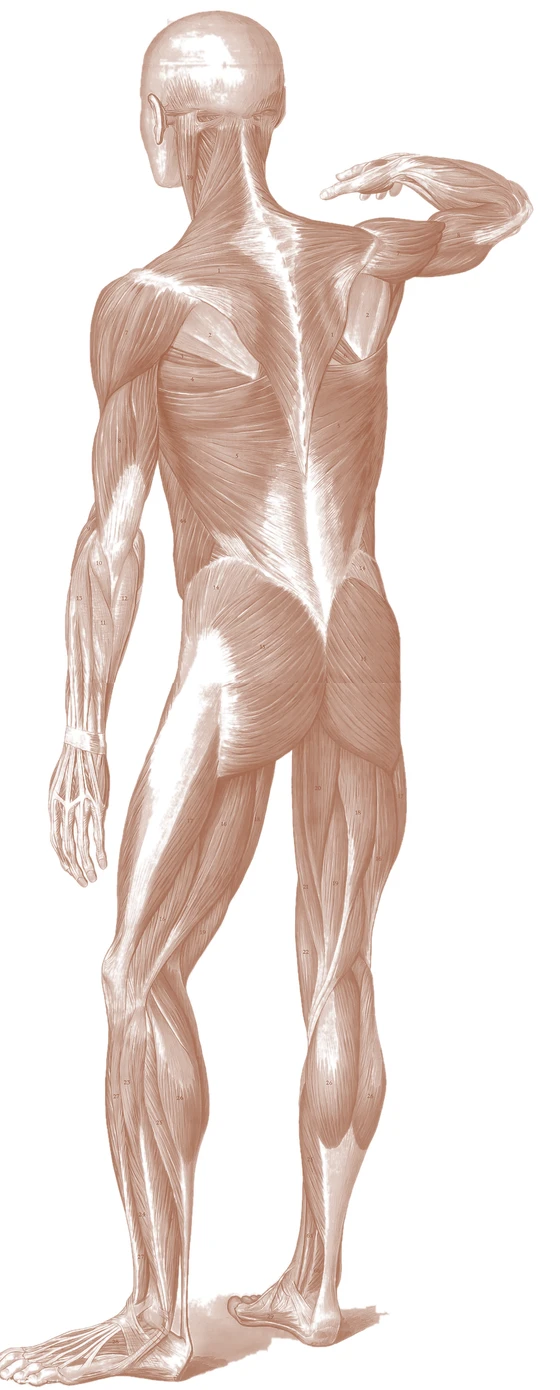
Spots show common areas, not a diagnosis. Illustration adapted from Gustaf Wennman’s anatomical wall chart (c. 1920, public domain): cropped and recoloured.
Setting Expectations
This is not a spa massage. Myofascial release uses no oils or lotions. It involves slow, sustained holds that stay in one place until the tissue eases, rather than rubbing or kneading.
Tell Kayla first about a recent fracture or wound, a skin infection, easy bruising or blood thinners, or a scar that is still healing. She may adjust her approach or choose another way to treat. If shortness of breath or chest tightness is new or worrying, see a doctor first.
BC physiotherapists must explain the benefits and risks and get your consent before treating you, and you can stop at any time. See the standards.
The Details: Frequently Asked Questions
What is fascia and how does releasing it work?
Fascia is the connective tissue that wraps your muscles and organs. Research suggests that sustained pressure does not physically "melt" or reshape it. Instead, the touch is thought to stimulate sensors in the tissue and signal your nervous system to relax the area. Studies of how well myofascial release works are still limited, so it is best seen as a comfort and mobility tool.
What does myofascial release feel like afterward?
Some people describe it like taking off a heavy backpack after a long hike: lighter, looser, and easier to stand tall. Some feel calm or sleepy, and some feel mild soreness. Effects vary and tend to be short-term, so Kayla follows it with movement.