
- PacingDynamic & targeted
- SensationBrief, intense ache
- Patient controlHigh (you set the pace)
What is IMS?
IMS, also called dry needling, uses a thin, solid needle placed into a tight muscle band or trigger point.
How it feels
A brief, deep muscle twitch or cramp, and for many people a feeling of release afterward.
The goal
Easing stubborn knots and trigger points so the muscle can relax and move better.
Pairs well with
Myofascial release or manual therapy. Kayla may do them one after another in the same visit, or at a later visit, depending on what suits you.
Where IMS May Help
Tap an area on the body, or choose one below. Don’t see yours? Pick “Somewhere else.”
Tight spots at the base of your skull or in your shoulders that seem to set off a headache.
How IMS may helpTrigger points in neck and shoulder muscles can refer pain into the head. Needling them may ease that, and Kayla pairs it with posture and movement work. A sudden, severe or unusual headache should be checked by a doctor first.
A knot keeps coming back near your shoulder blade, no matter how much you stretch or rub it.
How IMS may helpKayla finds the tight band by feel and needles it. A brief twitch is common, and the muscle may feel looser afterward.
It feels like you have a tight band wrapping around your elbow.
How IMS may helpTight muscles in the forearm and upper arm can pull at the elbow. Needling them, with gentle stretching, may ease that band-like feeling.
You have a deep, nagging ache in your lower back that you just can't stretch out.
How IMS may helpDeep muscles beside the spine are hard to reach by stretching, but a needle can. A day or two of soreness is common.
You have a deep, nagging ache in your hip that you just can't stretch out.
How IMS may helpDeep hip and glute muscles sit under other layers. Needling can reach them, and a stretch or strength move from Kayla may help the change last.
It feels like you have a tight band wrapping around your knee.
How IMS may helpTight muscles above and below the knee, like the thigh and calf, can tug on it. Needling them may ease that pull while you keep strengthening.
The area that bothers you isn’t shown here? That’s okay. These are just common spots.
What happens nextKayla starts by assessing the area and how it moves. She will tell you honestly whether IMS is a good fit for it, or whether something else may suit it better.
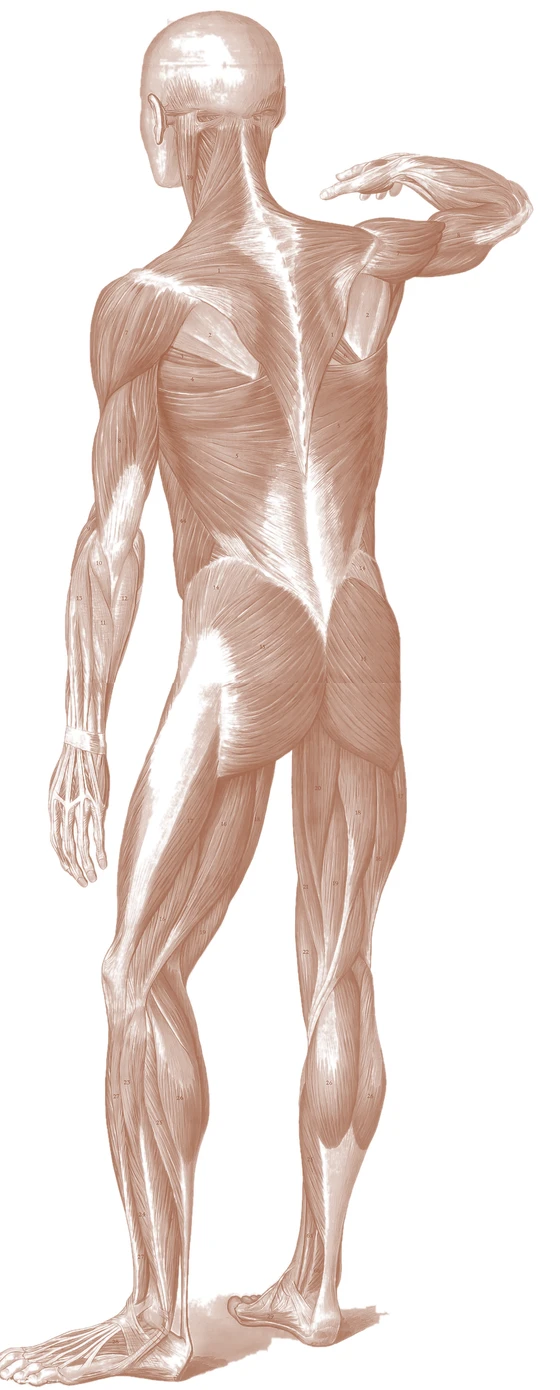
Spots show common areas, not a diagnosis. Illustration adapted from Gustaf Wennman’s anatomical wall chart (c. 1920, public domain): cropped and recoloured.
Setting Expectations
Let's be honest: IMS can be intense. It can feel like a sudden, deep muscle cramp, and the area may feel sore, like after a heavy workout, for a day or two. Kayla will explain what to expect before she starts, and you can pause or stop at any time.
Tell Kayla first if you take blood thinners, have a bleeding disorder, are pregnant, have a pacemaker or other implanted device, have an infection or skin problem in the area, have reduced feeling there, or are very afraid of needles. Bleeding, bruising, and soreness are common. Serious problems are rare, fewer than 1 in 1,000 sessions in a US survey of more than 20,000. In BC, physiotherapists need CHCPBC certification to do dry needling. Check the public register.
BC physiotherapists must explain the benefits and risks and get your consent before treating you, and you can stop at any time. See the standards.
The Details: Frequently Asked Questions
How does IMS dry needling work?
IMS was developed by Dr. Chan Gunn on the idea that stubbornly tight muscles can be tied to irritated nerves sending constant "tighten" signals. A needle placed in the tight muscle often triggers a brief twitch, a quick reflex, followed by the muscle letting go. Researchers are still working out exactly how dry needling works. Reviews of trials found it can reduce muscle pain in the neck, shoulders, and upper back, at least in the short term.
Will I be sore after an IMS treatment?
Soreness is common. Many people feel heavy, achy muscles for a day or two, a bit like after a hard workout, and a small bruise at the needle site can happen. It usually settles on its own. If it is more than you expected, or has not eased after a few days, let Kayla know.